Description
Product Overview
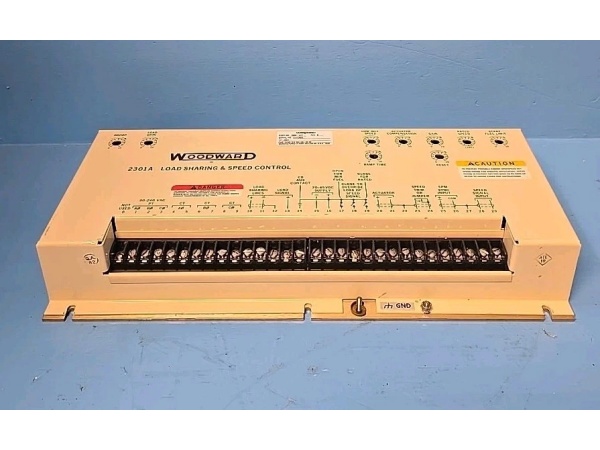
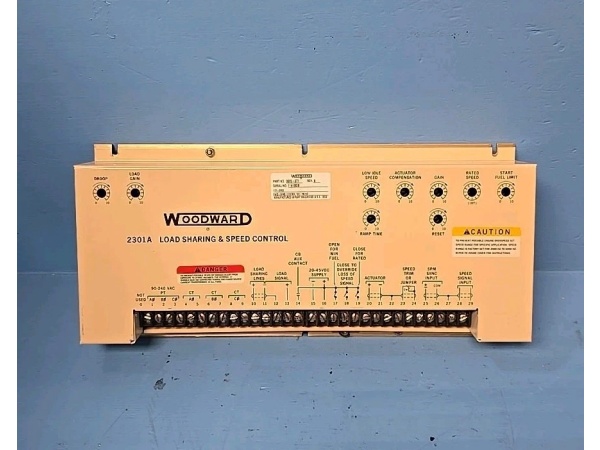
The Woodward 9905-002L is a relay input module designed for industrial control systems, serving as a critical interface between mechanical/electrical relay contacts and digital control systems (e.g., PLCs, DCS). Its primary function is to convert relay contact signals (normally open/normally closed) into digital signals (0V/5V) that can be processed by downstream controllers, while providing electrical isolation to protect sensitive electronics from noise and transients.
As part of Woodward’s industrial automation portfolio, the 9905-002L is widely used in industries where reliable signal acquisition is essential—such as power generation, chemical processing, and machine automation. Its compact design and robust construction make it suitable for installation in control cabinets or field enclosures, even in harsh industrial environments.
Key Technical Specifications
The 9905-002L’s technical parameters are tailored for industrial harsh environments and reliable signal processing, with insights from Woodward’s industrial automation documentation and supplier listings:
-
Number of Inputs: 8 independent relay contact inputs (configurable for NO/NC).
-
Input Voltage: 24V DC (nominal, ±10% tolerance) – compatible with most industrial control systems.
-
Current Rating: 5A per input (resistive load) – suitable for driving relays or solenoids.
-
Isolation Voltage: 1500V AC (channel-to-channel) – prevents cross-talk and surge damage.
-
Response Time: <10ms – ensures real-time signal processing for time-critical applications.
-
Operating Temperature: -40°C to +70°C (-40°F to +158°F) – withstands extreme industrial temperatures.
-
Humidity Range: 5–95% RH (non-condensing) – resistant to moisture in humid environments.
-
Dimensions: ~100mm × 60mm × 25mm (3.9in × 2.4in × 1.0in) – compact for cabinet installation.
-
Weight: ~0.2kg (0.44lbs) – lightweight for easy handling during maintenance.

WOODWARD 9905-377
Field Application & Problem Solved
In industrial control systems, relay contact signals (e.g., from emergency stop buttons, limit switches, or motor starters) are often noisy or prone to transient voltages, which can corrupt digital signals and cause equipment malfunctions. The 9905-002L addresses these challenges by:
-
Signal Conditioning:It converts relay contact signals (mechanical or electrical) into clean digital signals (0V/5V), eliminating noise and ensuring reliable processing by PLCs/DCS. For example, a chemical plant using the 9905-002L reduced false alarms from limit switches by 80% due to improved signal quality.
-
Electrical Isolation:The 1500V AC isolation voltage prevents surge damage from field devices (e.g., motors, solenoids) from reaching the control system. This is critical for protecting sensitive electronics in power plants, where transients are common.
-
Status Indication:The module provides visual indicators (LEDs) for each input channel, allowing operators to quickly verify the status of relay contacts (e.g., whether a motor starter is engaged). This reduces troubleshooting time and improves system uptime.
Typical Applications:
-
Process Control: Monitoring the status of valves, pumps, and other equipment in chemical plants or refineries.
-
Safety Systems: Detecting emergency stop button presses or safety guard openings in machine automation.
-
Power Generation: Monitoring the status of generators, turbines, and auxiliary equipment in power plants.
Installation & Maintenance Pitfalls (Expert Tips)
To ensure optimal performance and reliability of the 9905-002L, follow these best practices:
-
Verify Compatibility:
-
Confirm that the input voltage (24V DC) matches the module’s rating. Mismatched voltage can damage the internal circuitry—use a multimeter to check the input voltage before installation.
-
-
Proper Wiring:
-
Use shielded twisted-pair cables for input signals to reduce electromagnetic interference (EMI). Avoid running cables alongside power lines—this is a classic cause of “ghost” signals (false readings).
-
Tip: Ground the cable’s shield at one end (preferably the module end) to ensure effective shielding.
-
-
Test Input Signals:
-
After installation, test each input channel using a relay tester to verify that the module correctly converts contact signals to digital outputs. Check for consistent response times (<10ms) and correct status indication (LEDs).
-
-
Perform Regular Maintenance:
-
Inspect the module annually for signs of wear (e.g., cracked casings, loose connections). Clean the module’s connectors with isopropyl alcohol to remove dirt and debris, which can cause signal corruption.
WOODWARD 9905-377
-
Technical Deep Dive & Overview
The 9905-002L operates on Woodward’s industrial automation platform, which combines a microcontroller with signal conditioning circuitry to deliver reliable relay input processing. Here’s a simplified breakdown of its workflow:
-
Signal Reception:The module receives relay contact signals (NO/NC) from field devices (e.g., emergency stop buttons).
-
Signal Conditioning:The internal circuitry filters out noise (via a low-pass filter) and amplifies the signal (if necessary) to ensure accurate conversion.
-
Isolation:Galvanic isolation (via optocouplers) separates the field wiring from the control system, preventing surge damage and cross-talk.
-
Digital Conversion:The microcontroller converts the conditioned analog signal to a digital value (0V/5V) proportional to the relay contact status.
-
Output to Controller:The digital signal is sent to the PLC/DCS via a backplane or communication cable, where it’s used for process control (e.g., stopping a motor when an emergency stop button is pressed).
What sets the 9905-002L apart is its balance of reliability and simplicity. Unlike more complex input modules, the 9905-002L focuses on core functionality (signal conversion, isolation, status indication) without unnecessary features, making it easy to install and maintain—critical for 24/7 operations like power plants.
Final Notes
The Woodward 9905-002L is a reliable and essential component of industrial control systems, enabling accurate signal acquisition from relay contacts while protecting sensitive electronics from noise and transients. Its compact design, robust construction, and ease of maintenance make it ideal for mission-critical applications where reliability is non-negotiable.
When installing or maintaining the 9905-002L, always adhere to Woodward’s guidelines and consult with a certified technician to ensure optimal performance. For more detailed information, refer to Woodward’s official Industrial Automation Relay Input Module Manual (Document # IA-RI-001) or contact Woodward’s customer support for application-specific advice.