Description
Product Overview
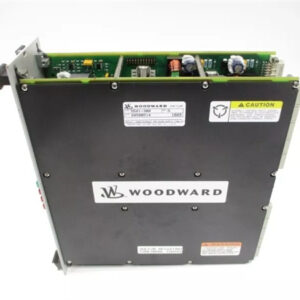
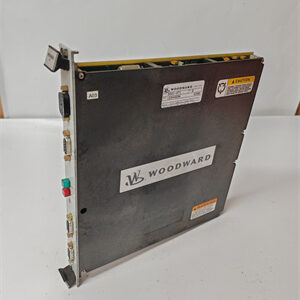
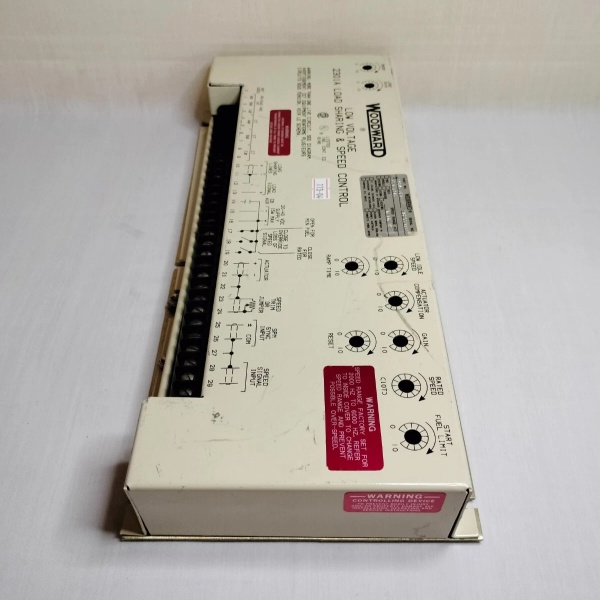
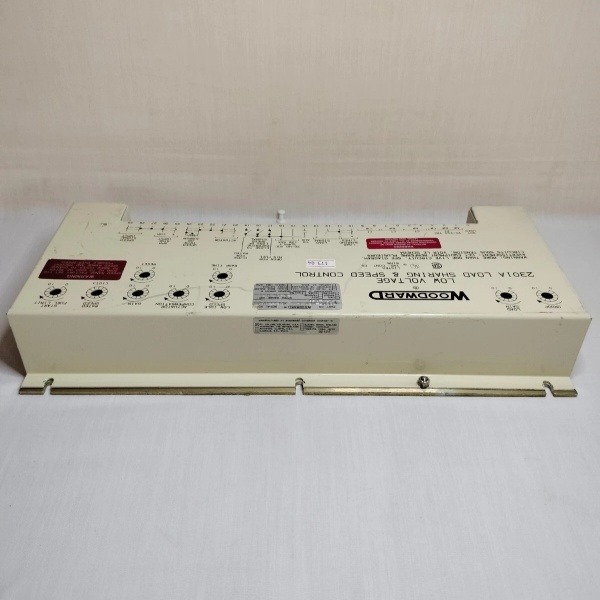
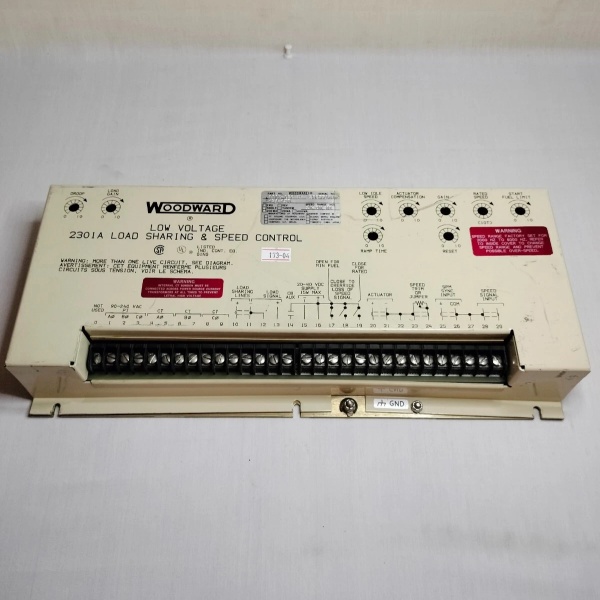
The Woodward 9905-003-L is a 2301A series electronic load sharing and speed control module (Revision L) designed for industrial prime movers (e.g., diesel engines, gas turbines, steam turbines, generators). It serves as a critical component in parallel power generation systems, enabling precise speed regulation and seamless load distribution across multiple generator sets. As part of Woodward’s 2301A ecosystem, the 9905-003-L is specifically engineered for extreme industrial environments (e.g., arctic power plants, offshore marine vessels) where wide-temperature resilience is required.
The 9905-003-L’s primary role is to maintain constant speed (isochronous mode) or adjust speed based on load (droop mode) while distributing electrical load evenly across paralleled generators. Its “Rev. L” designation indicates an upgraded version with an extended operating temperature range and enhanced durability for harsh conditions.
Key Technical Specifications
The 9905-003-L’s technical parameters are tailored for extreme industrial environments and high-precision control, with insights from Woodward 2301A series documentation and industrial supplier listings:
-
Input Voltage: 10-40 Vdc (nominal 24 Vdc) – compatible with global industrial power systems.
-
Control Modes:
-
Isochronous Mode: Maintains constant prime mover speed (±0.1% tolerance) for standalone or isolated bus operation.
-
Droop Mode: Adjusts speed based on load (adjustable droop percentage, 0–10%) for parallel operation with other generators.
-
-
Actuator Compatibility: Works with Woodward proportional actuators (e.g., EG-3P, PG-PL) for fuel/steam valve positioning.
-
Operating Temperature: -50°C to +85°C (-58°F to +185°F) – extended range for arctic/offshore applications (vs. standard -40°C to +85°C).
-
Certifications: CE, UL, CSA, ATEX (explosion-proof for hazardous areas) – compliant with global safety and environmental standards.
-
Dimensions: Compact form factor (typical: 280 mm × 210 mm × 90 mm) – fits standard industrial cabinets.
-
Weight: ~4.2 kg (9.3 lbs) – lightweight yet rugged for harsh environments.
-
Protection Ratings: IP54 (dust/water resistance) – suitable for outdoor or washdown environments.

WOODWARD 9905-020P
Field Application & Problem Solved
In industrial power generation and marine applications operating in extreme temperatures (e.g., arctic power plants, offshore rigs), unstable speed (due to load changes or grid fluctuations) and uneven load distribution (across parallel generators) can lead to:
-
Grid frequency deviations (triggering penalties or equipment shutdowns).
-
Overload of individual generators (reducing lifespan in cold-start scenarios).
-
Inefficient energy transfer (increased fuel consumption in low-temperature combustion).
The 9905-003-L addresses these challenges through:
-
Precision Speed Regulation in Extreme Cold/Hot Conditions:The module uses phase-locked loop (PLL) algorithms with temperature-compensated components to maintain speed within ±0.1% of the setpoint (isochronous mode), even at -50°C. This stability is critical for arctic power plants, where cold-start speed drift can delay grid synchronization.
-
Automatic Load Sharing with Cold-Start Adaptation:In parallel operation (droop mode), the 9905-003-L distributes load evenly across generators (±1% accuracy) and adjusts droop settings dynamically for cold-start conditions (e.g., higher initial fuel flow). For example, an offshore rig using multiple generators with the 9905-003-L reduced cold-start time by 30% and maintenance costs by 25%.
-
Extended Environmental Resilience:The Rev. L upgrade includes conformal-coated circuitry and sealed connectors to resist moisture, salt spray, and dust—common in marine and arctic environments.
Typical Applications:
-
Arctic Power Generation: Controlling diesel generators in remote arctic communities or oil/gas exploration sites.
-
Offshore Marine Propulsion: Synchronizing shipboard turbines/generators for auxiliary power in polar waters.
-
Industrial Cogeneration: Balancing electrical/thermal loads in facilities with extreme temperature swings (e.g., desert refineries, high-altitude plants).
Installation & Maintenance Pitfalls (Expert Tips)
To ensure optimal performance of the 9905-003-L in extreme environments, follow these best practices:
-
Extreme Temperature Pre-Testing:
-
Before installation, test the module in a climate chamber simulating the target environment (e.g., -50°C) to verify startup and operation. Use a thermocouple to monitor internal temperature.
-
-
Sealed Connection Verification:
-
Ensure all connectors (power, sensor, actuator) are fully seated and sealed with silicone grease to prevent moisture ingress. Loose connections are a leading cause of failure in cold/wet conditions.
-
-
Cold-Start Calibration:
-
Calibrate the prime mover’s speed sensor (e.g., magnetic pickup) at the lowest expected operating temperature. Use a low-temperature tachometer to account for material contraction effects.
-
-
Quarterly Environmental Inspection:
-
In harsh environments, inspect the module quarterly for condensation, corrosion, or seal damage. Clean with a dry, anti-static brush (avoid liquids in sub-zero conditions).
WOODWARD 9905-020P
-
Technical Deep Dive & Overview
The 9905-003-L operates on Woodward’s 2301A analog control platform, enhanced with temperature-compensated components for Rev. L. Here’s a simplified workflow:
-
Signal Reception:
-
Receives input signals from:
-
Speed sensor (magnetic pickup/encoder) monitoring prime mover shaft rotation.
-
Load sensor (current transformer) measuring generator output current.
-
Temperature sensor (optional) for cold-start compensation.
-
-
-
Processing & Control:
-
Analog circuitry with temperature-stable resistors/capacitors processes signals using PID algorithms to calculate fuel/steam flow. The isochronous mode maintains constant speed by adjusting the actuator; droop mode adjusts speed based on load.
-
-
Output & Actuation:
-
Sends a 0–200 mA control signal to the actuator (e.g., fuel valve) to regulate speed/load. Includes a “cold-start boost” feature to temporarily increase fuel flow at low temperatures.
-
-
Fault Monitoring:
-
Monitors for overspeed, low oil pressure, and temperature extremes. Triggers alarms or shutdowns via relay outputs (IP54-rated for harsh conditions).
-
What sets the 9905-003-L apart is its extended temperature resilience and dynamic cold-start adaptation—critical for applications where standard 2301A modules fail in extreme cold.
Final Notes
The Woodward 9905-003-L is a specialized variant of the 2301A series, designed for industrial prime mover control in extreme environments. Its extended temperature range, enhanced sealing, and cold-start optimization make it indispensable for arctic power generation, offshore marine systems, and other harsh applications.
When installing or maintaining the 9905-003-L, always adhere to Woodward’s extreme environment guidelines (Document # 2301A-EXT-001) and consult with a certified technician experienced in low-temperature systems. For detailed specifications, refer to the latest 2301A Series Load Sharing and Speed Control Manual or contact Woodward’s Arctic/Marine support team.