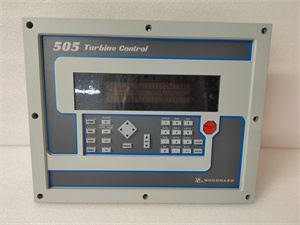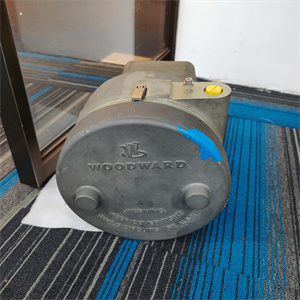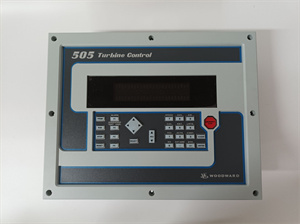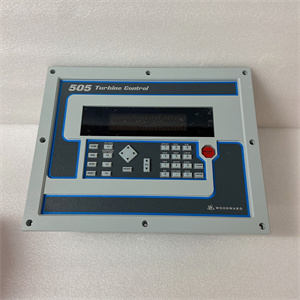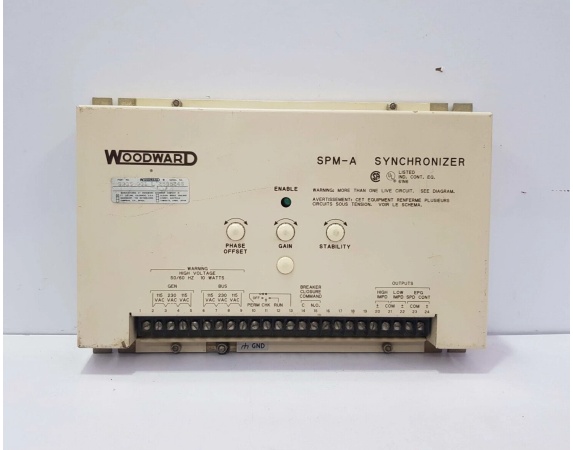
Description
Product Overview
The Woodward 9905-367 is a CANopen-enabled variant of the 2301A series electronic load sharing and speed control module, designed for industrial prime movers (e.g., diesel engines, gas turbines, generators) in high-speed networked industrial environments. As part of Woodward’s 2301A ecosystem, it retains core functionalities—precision speed regulation (±0.1% isochronous accuracy) and load sharing (±1% droop accuracy)—while adding CANopen communication (DS-301/DS-402 protocols) and expanded diagnostic capabilities, making it ideal for systems requiring deterministic data exchange (e.g., motion control, real-time monitoring).
The 9905-367’s primary role is to maintain constant speed (isochronous mode) or adjust speed based on load (droop mode, 0–18% adjustable droop) while distributing electrical load evenly across paralleled generators. Its CANopen interface enables seamless integration with PLCs, HMIs, and DCS/SCADA systems using the CAN bus, reducing wiring complexity and improving response times compared to traditional analog/digital I/O.
Key Technical Specifications
Insights from Woodward 2301A series documentation and industrial networking supplier listings (e.g., CAN in Automation, Woodward’s legacy catalogs) reveal the following parameters for the 9905-367:
-
Input Voltage: 20–40 Vdc (nominal 24 Vdc) – optimized for standard industrial DC power systems.
-
Control Modes:
-
Isochronous Mode: Maintains constant prime mover speed (±0.1% tolerance) for standalone/isolated bus operation.
-
Droop Mode: Adjusts speed based on load (adjustable droop percentage, 0–18%) for parallel operation (wider range than standard 2301A models).
-
-
Communication Interface: CANopen (DS-301/DS-402) – supports CiA 301 (communication profile) and CiA 402 (drive profile); baud rates: 125 kbps–1 Mbps; 11-bit/29-bit identifiers.
-
Actuator Compatibility: Works with Woodward proportional actuators (e.g., EG-3P, PG-PL, EPG-2) and CANopen-enabled actuators (e.g., third-party servo valves).
-
Operating Temperature: -35°C to +75°C (-31°F to +167°F) – extended range for semi-harsh environments.
-
Certifications: CE, UL, CSA, C-Tick – compliant with international industrial safety and EMC standards.
-
Dimensions: Compact form factor (~290 mm × 215 mm × 95 mm) – fits standard 19-inch control cabinets.
-
Weight: ~4.3 kg (9.5 lbs) – rugged yet lightweight for industrial use.
-
Diagnostic Features: 8x LED indicators (power, run, sync, CAN, fault, mode, actuator, comm) + non-volatile fault log (stores last 150 events with timestamps, error codes, and system parameters).
-
Output Signal: 0–200 mA (sink) or CANopen PDO (Process Data Object) for actuator control – dual-mode output for versatility.

Woodward 9905-001-L
Field Application & Problem Solved
In high-speed networked industrial systems (e.g., automotive test benches, marine hybrid propulsion, smart factories), the 9905-367 addresses:
-
Network Integration Challenges: Base 2301A modules lack native CANopen support, requiring gateways for PLC integration—adding latency and cost. The 9905-367’s built-in CANopen (DS-301/DS-402) enables direct communication with CAN-based control systems.
-
Deterministic Data Exchange: Traditional Modbus RTU (e.g., 9905-373) has higher latency (~10–100 ms) than CANopen (~1–5 ms), making it unsuitable for real-time motion control. The 9905-367’s CANopen ensures fast, reliable data transfer for dynamic load adjustments.
-
Limited Diagnostic Depth: Basic models store <50 fault events, complicating analysis of intermittent network or actuator issues. The 9905-367’s 150-event log captures long-term trends (e.g., CAN bus errors, actuator response delays).
Typical Applications:
-
Automotive Test Benches: Controlling dynamometer engines with CANopen-integrated torque/speed feedback.
-
Marine Hybrid Propulsion: Synchronizing shipboard generators with CANopen-based thruster controls.
-
Smart Factory Cogeneration: Balancing electrical/thermal loads in real-time via CANopen-linked DCS.
Installation & Maintenance Pitfalls (Expert Tips)
To ensure reliable CANopen communication and control with the 9905-367:
-
CAN Bus Termination & Shielding:
-
Terminate the CAN bus with 120Ω resistors at both ends. Use shielded twisted-pair cable (e.g., Belden 9841) and ground the shield at one point to minimize EMI.
-
-
Node ID & Baud Rate Configuration:
-
Assign a unique CANopen node ID (1–127) to the module. Match the baud rate (e.g., 500 kbps) across all nodes using Woodward’s CANopen Configuration Tool (Software # CCT-001).
-
-
PDO Mapping for Real-Time Data:
-
Map critical parameters (speed, load, faults) to CANopen PDOs (e.g., TPDO1 for actual speed, RPDO1 for setpoint) for deterministic updates (≤10 ms cycle time).
-
-
Periodic CAN Bus Health Checks:
-
Use a CAN analyzer (e.g., PCAN-View) to monitor bus load (<70%), error frames, and node status. Address CRC errors or arbitration losses promptly.
-
Technical Deep Dive & Overview
The 9905-367 operates on Woodward’s 2301A analog control platform with a CANopen digital overlay:
-
Signal Reception & Processing:
-
Accepts inputs from speed sensors (magnetic pickup), load sensors (CTs), and CANopen remote setpoints (via RPDOs). Analog circuitry with adaptive PID algorithms calculates fuel/steam flow adjustments.
-
-
Control Modes:
-
Isochronous: Locks speed to a setpoint (±0.1% accuracy) using phase-locked loop (PLL) circuits.
-
Droop: Adjusts speed based on load (0–18% droop) for parallel generator load sharing, with droop percentage settable via CANopen or local potentiometers.
-
-
CANopen Integration:
-
A dedicated CAN controller (e.g., NXP SJA1000) handles DS-301 (communication) and DS-402 (drive) profiles. Key objects include:
-
Object 6040h: Control word (start/stop, mode selection).
-
Object 6064h: Actual speed (0.1 RPM resolution).
-
Object 607Ah: Target speed (setpoint).
-
-
-
Diagnostic Logging:
-
A non-volatile flash memory stores 150 events, including CAN bus errors (e.g., “Bus Off”), actuator faults, and sensor drifts. Timestamps use an RTC with battery backup.
Woodward 9905-001-L
-
Distinction from Similar Models:
-
Communication Protocol: CANopen (DS-301/DS-402) vs. 9905-373’s Modbus RTU (slower, higher latency).
-
Expanded Fault Log: 150 events vs. 9905-373’s 100 events.
-
Wider Droop Range: 0–18% vs. 9905-373’s 0–15% for flexible parallel load sharing.
Final Notes
The Woodward 9905-367 is a CANopen-enabled 2301A series module designed for industrial prime mover control in high-speed networked environments requiring deterministic communication and real-time data exchange. Its CANopen (DS-301/DS-402) integration, expanded diagnostic logging, and wide droop range make it ideal for automotive testing, marine hybrid systems, and smart factory cogeneration.
-
Choose 9905-367 if: You need CANopen communication (fast, deterministic), a 150-event fault log, or a wider droop range (0–18%).
-
Consider Alternatives: For Modbus RTU, use 9905-373; for basic synchronization, use 9905-028 (SPM-A).
Always refer to Woodward’s 2301A CANopen-Enabled Module Manual (Document # 2301A-CAN-001) for installation guidelines. For CANopen configuration, use Woodward’s CANopen Setup Tool (Software # CST-001).