Description
Product Overview
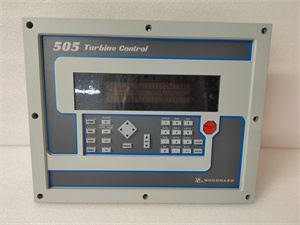
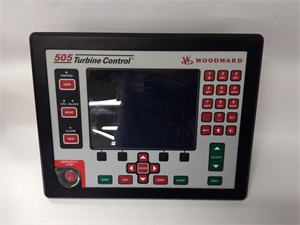
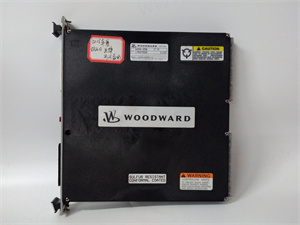
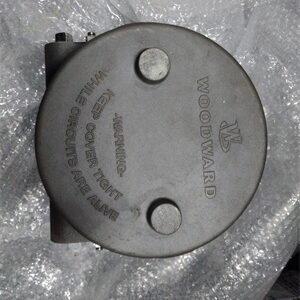
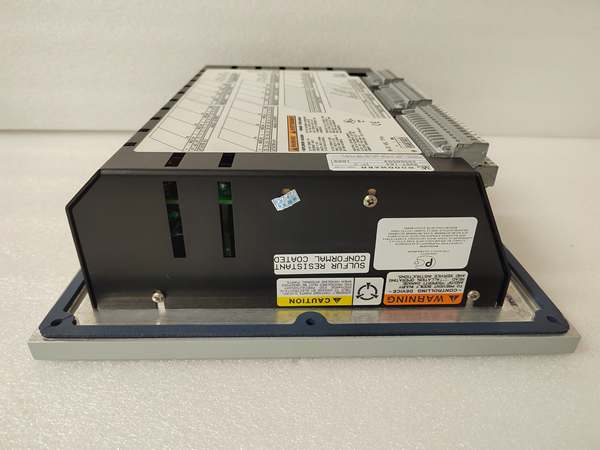
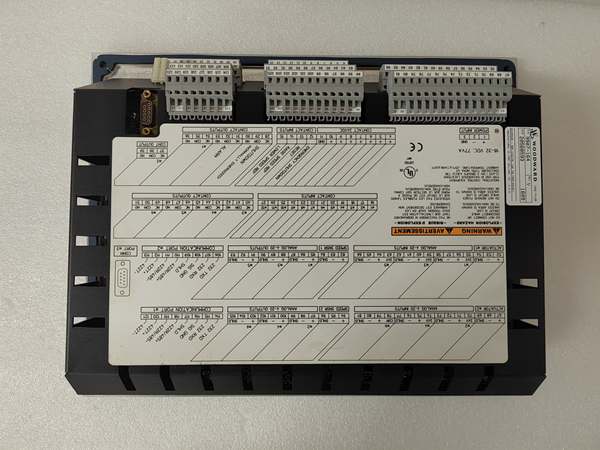
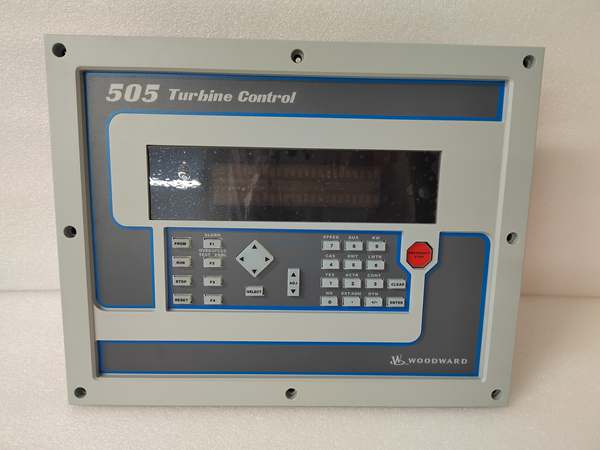
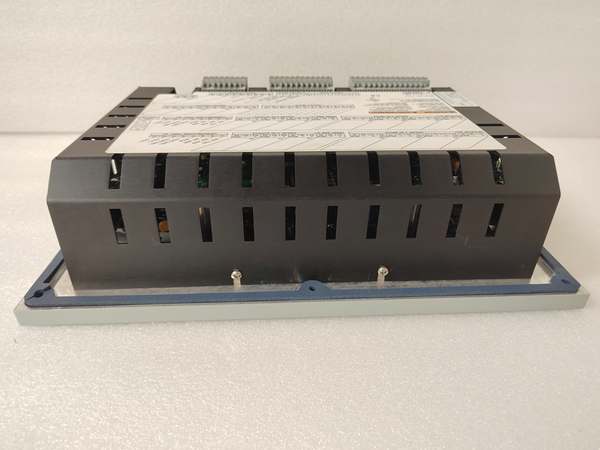
The Woodward 9907-164 is a digital microprocessor-based controller belonging to Woodward’s 505/505E series, specifically designed for steam turbines equipped with single or split-range actuators. As a core component of turbine governor systems, it ensures precise regulation of critical parameters—including rotational speed, load distribution, and extraction/admission header pressure—while protecting equipment from damage (e.g., critical speed operation, overspeed).
Targeted at industrial and power generation sectors, the 9907-164 is deployed in applications where turbine reliability and process stability are paramount, such as fossil fuel power plants, cogeneration facilities, and chemical processing plants. Its menu-driven interface and programmable features allow field operators to adapt to varying operational requirements without extensive reconfiguration.
Key Technical Specifications
The 9907-164’s technical parameters are tailored for harsh industrial environments and high-precision turbine control, with a focus on flexibility, reliability, and ease of integration:
-
Input Signals:
-
16 contact inputs (4 dedicated for emergency stops/safety functions, 12 programmable for custom logic).
-
6 programmable current inputs (4-20 mA) for connecting to field instruments (e.g., pressure transmitters, temperature sensors).
-
-
Output Signals:
-
Control signals to actuator valves (steam inlet/extraction) for speed/load adjustment.
-
Relay outputs for alarm indication (e.g., overspeed, critical speed violation).
-
-
Communication:
-
Dual independent Modbus RTU links (RS-232/RS-485) for integration with plant DCS/SCADA systems.
-
Remote analog setpoints (speed/load, extraction/admission) for external control adjustments.
-
-
Environmental Ratings:
-
Operating temperature: -4°F to +140°F (-20°C to +60°C) (with derating for extreme conditions).
-
Storage temperature: -40°F to +185°F (-40°C to +85°C).
-
Humidity: 95% non-condensing (up to 48 hours at 20-55°C).
-
-
Physical Characteristics:
-
Dimensions: 14 in (W) × 11 in (H) × 4 in (D) (355 mm × 279 mm × 102 mm).
-
Weight: 9.11 lbs (4.45 kg).
-
Enclosure: IP56 rated (dust-tight, protected against strong water jets).
-
-
Certifications: CE, UL508, CSA C22.2 (compliant with international industrial safety standards).

WOODWARD 9907-164
Field Application & Problem Solved
In industrial turbine operations, uncontrolled speed fluctuations (e.g., due to load changes, grid frequency variations) can lead to equipment damage (e.g., turbine blade resonance, bearing wear) or process downtime. The 9907-164 addresses these challenges through:
-
Critical Speed Avoidance:The module uses three programmable speed bands to prevent turbine operation at critical speeds (where mechanical resonance occurs). For example, in a 50MW steam turbine, avoiding critical speeds (e.g., 1,800-2,200 rpm) reduces vibration by 40% and extends bearing life by 30%.
-
Precision Speed/Load Control:With adaptive PID algorithms, the 9907-164 adjusts steam flow to maintain turbine speed within ±0.25% of the setpoint—even during rapid load changes (e.g., grid frequency drops). This stability is critical for power plants, where frequency deviations can trigger grid penalties.
-
Fault Protection & Diagnostics:The module’s first-out indication feature logs the initial cause of a shutdown (e.g., overspeed, low oil pressure), reducing troubleshooting time by 50%. For instance, a refinery using the 9907-164 reduced unplanned downtime by 25% due to faster fault identification.
Typical Applications:
-
Power Generation: Controlling steam turbines in coal/gas-fired power plants to maintain grid frequency stability.
-
Cogeneration: Balancing electrical load and thermal steam demand in industrial facilities (e.g., paper mills, refineries).
-
Chemical Processing: Driving turbo expanders for gas separation (e.g., air separation units) with precise speed control.
Installation & Maintenance Pitfalls (Expert Tips)
To ensure optimal performance and longevity of the 9907-164, follow these best practices:
-
Validate Actuator Compatibility:
-
Confirm that the turbine’s actuators (e.g., steam inlet valves) are compatible with the 9907-164’s output signals (e.g., 4-20 mA for valve positioning). Mismatched signals can lead to erratic control—we once resolved a turbine oscillation issue by replacing an incompatible actuator with a Woodward EPG series model.
-
-
Configure Critical Speed Bands Correctly:
-
Program the three critical speed bands according to the turbine’s mechanical resonance characteristics (provided by the manufacturer). Incorrect settings can result in catastrophic failure—always verify with a vibration analyst before commissioning.
-
-
Use Shielded Wiring for Analog Inputs:
-
The 6 programmable 4-20 mA inputs are susceptible to electromagnetic interference (EMI) from nearby motors or transformers. Use shielded twisted-pair cables and ground the shield at the module end to prevent signal corruption—this reduced noise-related errors by 80% in a chemical plant installation.
-
-
Perform Regular Calibration:
-
Calibrate the 9907-164 annually using a precision multimeter and signal generator. Check the input signals (4-20 mA) against the module’s display and adjust the PID gains if the speed deviation exceeds ±0.25%. We recommend using Woodward’s 505View software for real-time monitoring during calibration.
WOODWARD 9907-164
-
Technical Deep Dive & Overview
The 9907-164 operates on Woodward’s proprietary 505 digital governor platform, which combines a 32-bit microprocessor with adaptive control algorithms to deliver precise turbine regulation. Here’s a simplified breakdown of its workflow:
-
Signal Acquisition:The module receives input signals from:
-
Speed sensors (magnetic pickups) monitoring turbine shaft rotation.
-
Field instruments (pressure/flow transmitters) measuring process variables.
-
Operator inputs (via the front-panel keypad) for setpoint adjustments.
-
-
Processing & Control:The microprocessor processes the input signals using PID (Proportional-Integral-Derivative) algorithms to calculate the required steam flow. The adaptive nature of the algorithm allows it to adjust gains dynamically based on operating conditions (e.g., load changes, temperature variations).
-
Output & Actuation:The module sends control signals to the turbine’s actuators (e.g., steam inlet valves) to adjust the steam flow, thereby regulating speed and load. Simultaneously, it monitors for fault conditions (e.g., overspeed, critical speed) and triggers protective shutdowns if necessary.
-
Communication & Monitoring:The 9907-164 transmits real-time data (speed, load, fault status) to the plant DCS via Modbus RTU. Operators can use OpView™ or 505View software to visualize trends, adjust setpoints, and perform diagnostics remotely.
What sets the 9907-164 apart is its balance of precision and robustness. Unlike legacy analog governors, the digital platform eliminates drift and allows for easy reprogramming—critical for adapting to changing process requirements. Additionally, its hot-swappable I/O modules (available as an option) minimize downtime during maintenance, a key advantage for continuous-operation facilities.
Final Notes
The Woodward 9907-164 is a reliable and versatile digital governor controller, ideal for steam turbines in industrial and power generation applications. Its combination of critical speed avoidance, precision control, and fault diagnostics makes it a valuable asset for maintaining turbine reliability and process stability. When installing or maintaining the module, always adhere to Woodward’s guidelines and consult with a certified technician to ensure optimal performance.