Description
System Architecture & Operational Principle
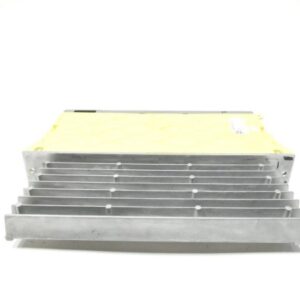
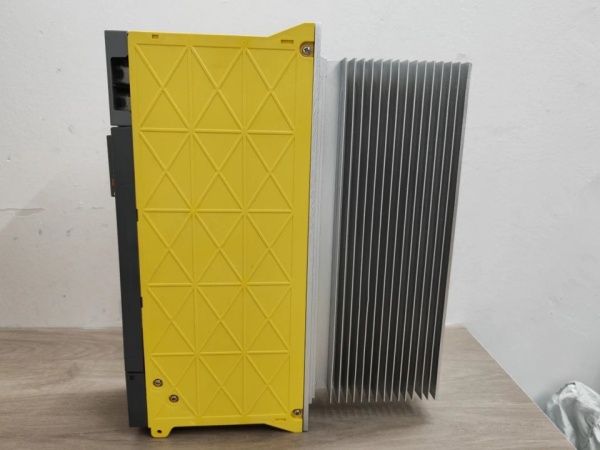
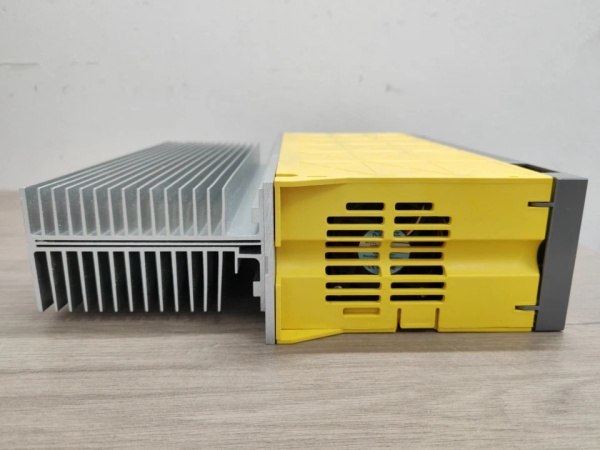
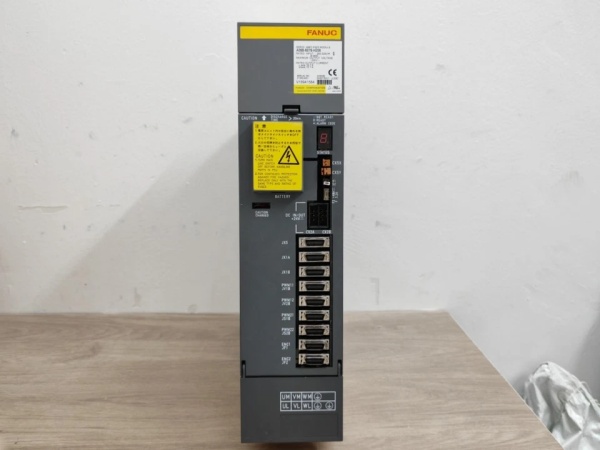
The Fanuc A06B-6079-H208 is a dual-axis AC servo amplifier within the Fanuc βi SVSP (Servo & Spindle Integrated) series, designed for Level 1 (Device) or Level 2 (Control) of the Purdue Model in industrial automation. It resides in the control cabinet (typically mounted on a DIN rail or panel) and serves as the bridge between Fanuc CNC systems (e.g., 0i-MF, 30i) and servo motors (e.g., Fanuc Alpha iS series).
Upstream Communication
Receives FSSB (FANUC Serial Servo Bus) signals from the CNC system, which encode commands for torque, velocity, or position. The amplifier converts these digital signals into analog voltages/currents to drive the servo motors.
Downstream Communication
Transmits feedback signals from the servo motors (via encoders) back to the CNC system via FSSB. This closed-loop feedback enables the CNC to adjust the amplifier’s output, ensuring precise motion control (e.g., micron-level positioning in CNC machining).
Operational Advantages
-
Dual-Axis Control: Drives two servo axes (L/M) simultaneously, reducing the number of amplifiers needed for multi-axis machines (e.g., CNC mills, robots).
-
High Precision: Supports 17-bit absolute encoders, enabling resolution up to 131,072 counts per revolution for accurate motion.
-
Robust Design: IP65-rated enclosure resists dust and moisture, making it suitable for harsh industrial environments (e.g., factories, offshore platforms).
Core Technical Specifications
|
Attribute
|
Specification
|
|---|---|
|
Amplifier Series
|
Fanuc βi SVSP (Servo & Spindle Integrated)
|
|
Model Variant
|
SVM2-80/80 (dual-axis, 80A total output)
|
|
Input Voltage
|
283–325 V DC (nominal 300 V DC)
|
|
Rated Output Current
|
18.7 A per axis (L/M)
|
|
Total Power
|
9.5 kW
|
|
Communication Protocol
|
FSSB (FANUC Serial Servo Bus)
|
|
Control Method
|
Vector control (Fanuc αi Servo Algorithm)
|
|
Encoder Support
|
17-bit absolute encoder (e.g., Fanuc A1000 series)
|
|
Protection Rating
|
IP65 (dust/water resistant)
|
|
Operating Temperature
|
0°C to +40°C (32°F to 104°F)
|
|
Storage Temperature
|
-20°C to +60°C (-4°F to 140°F)
|
|
Weight
|
~25 kg (55 lbs)
|
|
Certifications
|
CE, UL, CSA
|
Customer Value & Operational Benefits
Enhanced Machinery Performance
The A06B-6079-H208’s dual-axis control and high precision enable faster cycle times and tighter tolerances in CNC machining. For example, a mold-making shop using the amplifier to drive a 5-axis CNC mill can reduce machining time by 20% while maintaining ±0.001-inch accuracy.
Reduced Maintenance Costs
The amplifier’s brushless design and IP65 rating minimize wear and tear, reducing the need for frequent replacements. Additionally, the FSSB communication protocol simplifies wiring, lowering installation costs.
Energy Efficiency
The amplifier’s vector control algorithm optimizes power consumption, reducing energy usage by 10–15% compared to older analog amplifiers. For a factory with 10 such amplifiers, this translates to $5,000+ in annual energy savings.
Seamless Integration
As part of the Fanuc βi series, the A06B-6079-H208 integrates seamlessly with Fanuc CNC systems and servo motors. This eliminates the need for custom parameter tuning—simply connect the amplifier to the CNC and motor, and configure the system via the CNC interface.
Field Engineer’s Notes (From the Trenches)
When installing the A06B-6079-H208, always verify the FSSB cable connections—loose or reversed cables can cause communication errors (e.g., “FSSB link down” alarm). I once saw a site where a contractor swapped the L/M axis cables, resulting in erratic motor movement. A simple check of the cable labels saved a 3-hour callout.Another gotcha: check the cooling fan—the amplifier’s internal fan is critical for heat dissipation. If the fan fails, the amplifier will overheat and trigger an “overtemperature” alarm. Clean the fan every 6 months (or more often in dusty environments) to prevent this.If the amplifier’s “FAULT” LED is red, check the alarm code—the 7-segment display will show a code (e.g., “8” for overcurrent, “1” for fan stop). Use Fanuc’s Alarm Code Manual to diagnose the issue (e.g., code “8” indicates a short circuit in the motor or cable).
Real-World Applications
-
CNC Machining: 5-Axis Mill Axis ControlA aerospace parts manufacturer uses the A06B-6079-H208 to drive the X/Y axes of a 5-axis CNC mill. The amplifier’s 18.7 A output current provides enough torque to move the heavy spindle assembly, while the 17-bit encoder ensures precise positioning for complex parts (e.g., turbine blades).
-
Robotics: Robotic Arm Joint Drive
An automotive assembly plant uses the A06B-6079-H208 to drive the shoulder and elbow joints of a 6-axis robotic arm. The dual-axis control allows the arm to move smoothly between tasks (e.g., picking up parts from a conveyor and placing them in a fixture), while the IP65 rating resists dust from the factory floor.

Fanuc A06B-6079-H208
High-Frequency Troubleshooting FAQ
Q: What does alarm code “8” indicate on the A06B-6079-H208?
A: Alarm code “8” (DC link current alarm) usually means:
-
Overcurrent: The motor is drawing more current than the amplifier’s rated 18.7 A (check the load, e.g., cutting depth in CNC).
-
Short Circuit: The motor cable or winding is shorted (use a multimeter to test for continuity).
-
Faulty Amplifier: The amplifier’s power stage is damaged (replace the amplifier if tests confirm no load issues).
Q: Can the A06B-6079-H208 be used with non-Fanuc servo motors?
A: No, the amplifier is designed to work exclusively with Fanuc Alpha iS series servo motors. Non-Fanuc motors may not provide the correct encoder signals or impedance, leading to inaccurate motion or amplifier damage.
Q: How do I replace the A06B-6079-H208?
A: Follow these steps:
-
Power Down: Turn off the CNC system and disconnect the amplifier’s power cable.
-
Remove Old Amplifier: Unscrew the amplifier from the DIN rail (use a Phillips screwdriver).
-
Install New Amplifier: Secure the new A06B-6079-H208 to the DIN rail and tighten the screws.
-
Connect Cables: Reconnect the FSSB cables (L/M axes) and power cable.
-
Power Up: Turn on the CNC system and verify the amplifier’s operation (check the “OK” LED).
Q: Why is the amplifier not responding to CNC commands?
A: Check three things first:
-
FSSB Communication: Ensure the FSSB cable is connected to the correct port (CN1) on the amplifier.
-
Parameter Settings: Verify that the CNC system’s servo parameters (e.g., motor code, pulse count) match the amplifier’s specifications.
-
Amplifier Status: Check the amplifier’s 7-segment display—if it shows “0”, the amplifier is ready; if it shows a fault code, diagnose the issue (see FAQ above).
Commercial Availability & Pricing
Please note: The listed price is not the actual final price. It is for reference only and is subject to appropriate negotiation based on current market conditions, quantity, and availability.