Description
System Architecture & Operational Principle
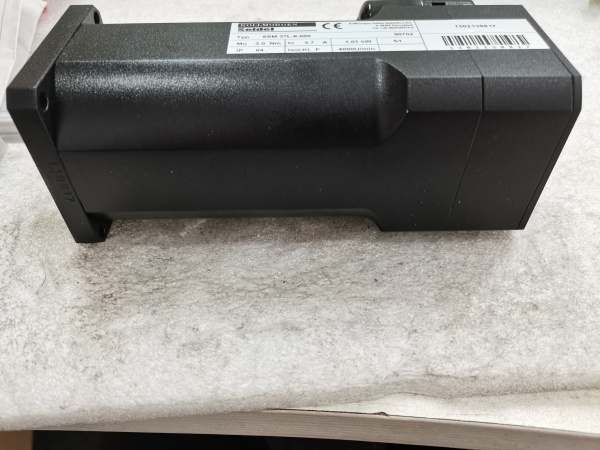
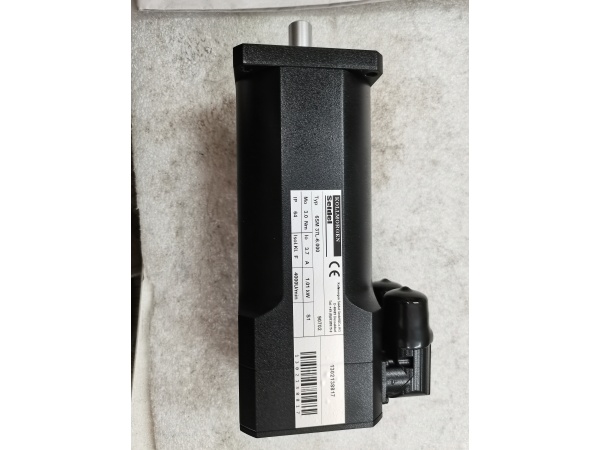
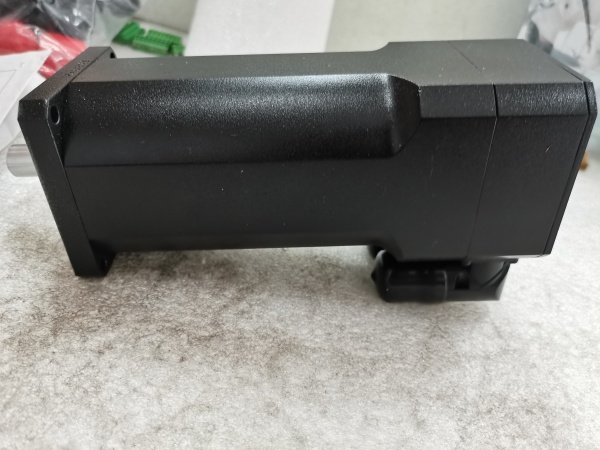
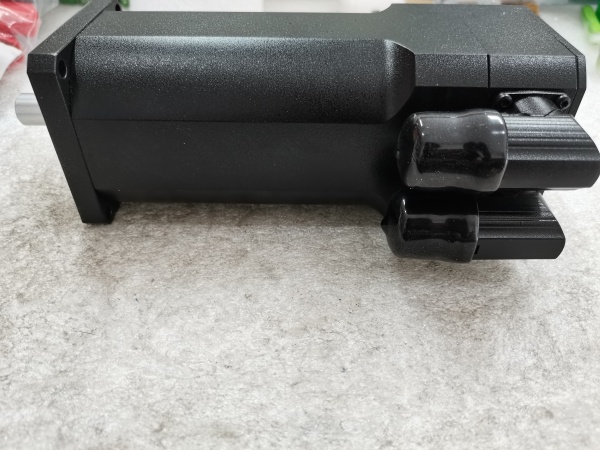
The Kollmorgen 6SM37VL-6000 is a high-performance servo motor designed for precision motion control in industrial automation. It serves as the actuation component in a servo system, interfacing with:
-
Upstream: Servo drives (e.g., Kollmorgen AKD) that send voltage/current commands to control motor speed and torque.
-
Downstream: Mechanical loads (e.g., robot arms, machine tool spindles) via a shaft or coupling.
Core Functional Blocks
-
Rotor/Stator Assembly: The motor uses a permanent magnet rotor and wound stator to generate torque. The high pole count (e.g., 8 poles) enables smooth operation at low speeds and high torque density.
-
Encoder: A high-resolution encoder (e.g., 2048 lines) provides feedback on rotor position and speed to the servo drive for closed-loop control.
-
Protection Circuitry: Includes overcurrent, overvoltage, and thermal protection to safeguard the motor from damage due to overloads or faults.
-
Mechanical Interface: A keyed shaft with a mounting flange (e.g., ISO 9409-1) allows easy integration with mechanical systems.
Operational Workflow
-
Command Reception: The servo drive sends a voltage/current command to the motor based on the desired speed/torque.
-
Torque Generation: The motor’s stator windings generate a magnetic field that interacts with the rotor’s permanent magnets, producing torque.
-
Feedback Loop: The encoder sends rotor position/speed data back to the servo drive, which adjusts the command to maintain precise control.
-
Load Actuation: The motor’s shaft rotates, driving the mechanical load (e.g., a robot arm) to the desired position.

Kollmorgen 6SM37VL-6000
Core Technical Specifications
|
Parameter
|
Specification
|
|---|---|
|
Rated Power
|
1.2 kW
|
|
Rated Speed
|
6000 rpm
|
|
Output Torque
|
3.00 Nm (continuous); 9.00 Nm (peak)
|
|
Voltage Range
|
24–48 V DC (nominal); 18–60 V DC (operational)
|
|
Current Draw
|
25 A (continuous); 75 A (peak)
|
|
Protection Rating
|
IP64 (dust-tight, water-resistant)
|
|
Operating Temperature
|
-40°C to +85°C (ambient)
|
|
Encoder Resolution
|
2048 lines (8192 counts/revolution)
|
|
Shaft Diameter
|
19 mm (keyed)
|
|
Weight
|
~12 kg (26.5 lbs)
|
Customer Value & Operational Benefits
1. High Torque Density for Compact Designs
The 6SM37VL-6000’s high torque density (3.00 Nm/kg) allows it to deliver sufficient torque in a compact form factor, making it ideal for space-constrained applications like collaborative robots or small machine tools.
2. Precise Motion Control for Quality Improvement
The motor’s high-resolution encoder (2048 lines) and fast dynamic response (≤10 ms settling time) enable micrometer-level precision in positioning, which is critical for high-quality manufacturing (e.g., semiconductor assembly, medical device fabrication).
3. Rugged Reliability for Harsh Environments
The IP64 protection rating and wide operating temperature range (-40°C to +85°C) make the motor suitable for harsh industrial environments (e.g., automotive paint lines, food processing plants), where dust, moisture, and temperature fluctuations are common.
4. Energy Efficiency for Cost Savings
The motor’s permanent magnet design and efficient winding configuration reduce energy consumption by up to 20% compared to traditional brushed motors, leading to lower operating costs for continuous-process industries (e.g., bottling lines, packaging machines).
Kollmorgen 6SM37VL-6000
Field Engineer’s Notes (From the Trenches)
When installing the 6SM37VL-6000, always verify the shaft alignment with the load (e.g., a robot arm) using a dial indicator—misalignment can cause premature bearing wear and reduce motor life. I once saw a technician skip this step, leading to a $5,000 bearing replacement after 6 months.Check the encoder cable for shielding—unshielded cables can pick up electromagnetic interference (EMI) from nearby VFDs or motors, leading to position errors. Use a shielded twisted-pair (STP) cable for the encoder connection.Test the thermal protection after installation—run the motor at full load for 30 minutes and check the temperature (should not exceed 85°C). If it does, verify the cooling (e.g., a fan) or reduce the load.
Real-World Applications
1. Industrial Robotics: Collaborative Robot Arms
A automotive manufacturer uses the 6SM37VL-6000 to power the joints of a collaborative robot arm used for assembling car seats. The motor’s high torque density allows the arm to lift heavy seat components (up to 10 kg) while maintaining precise positioning (±0.1 mm), improving assembly efficiency by 15%.
2. Machine Tools: CNC Milling Machines
A machine shop uses the 6SM37VL-6000 to drive the spindle of a CNC milling machine used for cutting aluminum parts. The motor’s fast dynamic response (≤10 ms settling time) enables the spindle to change speed quickly, reducing cycle time by 10% and improving part quality (±0.05 mm tolerance).
3. Food Processing: Bottling Lines
A beverage company uses the 6SM37VL-6000 to power the conveyor belt motors in a bottling line. The motor’s IP64 protection rating and wide operating temperature range (-40°C to +85°C) make it suitable for the wet, dusty environment of the bottling plant, reducing downtime due to motor faults by 25%.