Description
160-008: Product Overview
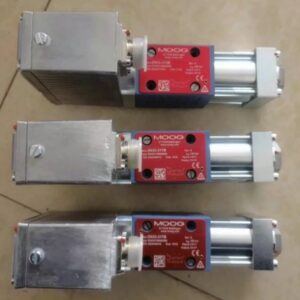
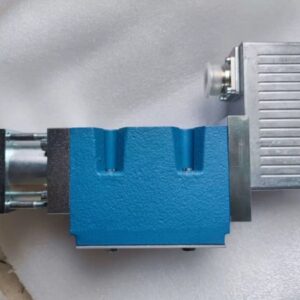
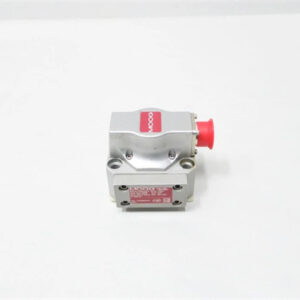
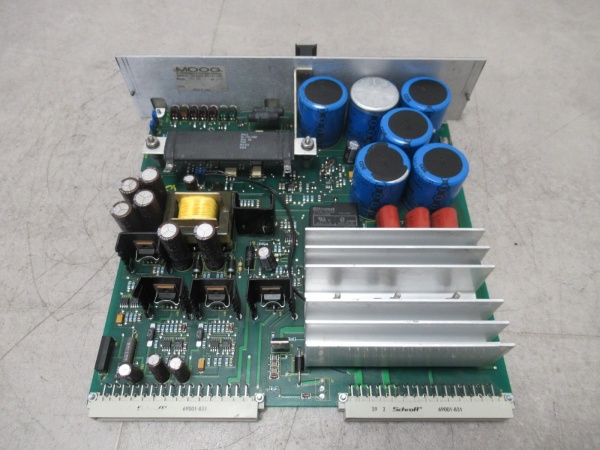
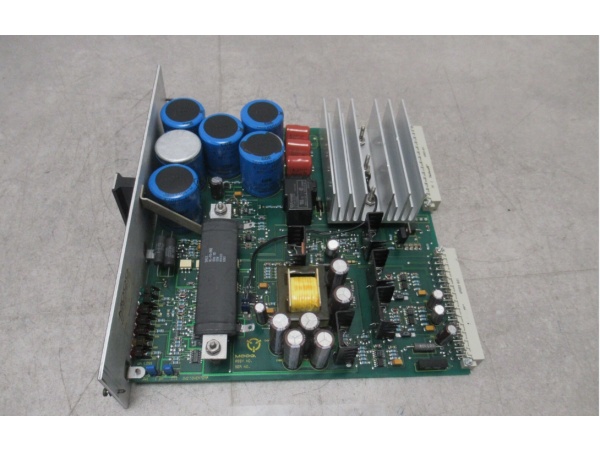
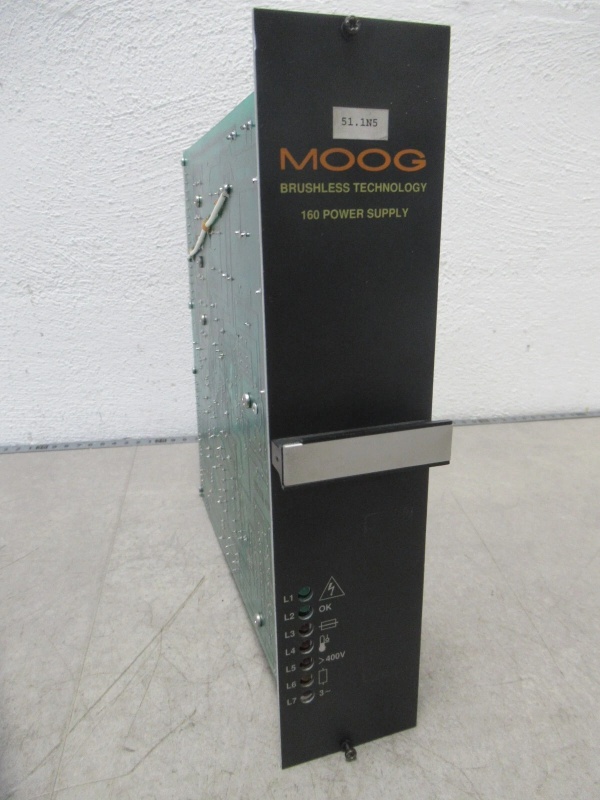
The MOOG 160-008 is a single-stage electrohydraulic servo valve from the 160 Series, designed for precision control of hydraulic actuators in dynamic systems where compact size and rapid response are critical. In an automation architecture, it serves as the interface between electronic controllers (e.g., PLCs, motion controllers) and hydraulic actuators (e.g., cylinders, small motors), converting low-power electrical command signals into proportional hydraulic flow and pressure. The 160 Series is recognized for its simplified design (single-stage operation) and suitability for moderate-flow applications, making it ideal for laboratory test rigs, small-scale industrial machinery, and educational simulation systems. This valve operates on a direct-acting spool controlled by a torque motor, ensuring linear response without the complexity of pilot stages. It is typically integrated into closed-loop systems with feedback from position/force sensors, where adjustments to the input signal maintain desired actuator behavior—essential for avoiding overshoot in high-accuracy positioning tasks.

Moog 160-008
160-008: Technical Specifications
-
Model Number: 160-008
-
Manufacturer: Moog Inc.
-
Product Type: Electrohydraulic Servo Valve (Single-Stage)
-
Valve Configuration: 4-way spool (symmetrical flow paths, spring-centered)
-
Nominal Flow: 5 GPM (18.9 L/min) @ 1000 psi (69 bar) differential pressure
-
Maximum Pressure: 2000 psi (138 bar) per port
-
Input Signal: ±10VDC (standard), ±40mA (via optional amplifier)
-
Response Time: <10 ms (step input to 90% flow)
-
Resolution: <0.2% of full scale (hysteresis <0.7%)
-
Operating Temperature: -20°C to +80°C (-4°F to 176°F) (fluid-dependent)
-
Fluid Compatibility: Petroleum-based oils (ISO VG 32/46), HFC fluids (e.g., Houghto-Safe 620)
-
Weight: 1.2 kg (2.6 lbs, valve body only)
-
Dimensions: 127mm (L) x 64mm (W) x 76mm (H) (approximate)
-
Certifications: CE, ISO 9001 (manufacturing standard)
Core Features & Customer Value
Compact Single-Stage Design: The 160-008 eliminates the pilot stage of two-stage valves, reducing size and weight by 30% compared to similar-flow alternatives. For engineers working in lab environments or space-constrained machinery (e.g., benchtop test rigs), this simplifies integration and minimizes panel footprint.
Rapid Dynamic Response: A <10 ms response time enables precise control during transient conditions, such as adjusting actuator speed in material testing machines. For researchers, this ensures accurate replication of cyclic loading patterns (e.g., fatigue tests) with minimal phase lag.
Simplified Maintenance: The single-stage design reduces potential failure points (no pilot nozzles or flappers), cutting annual maintenance time by 50% compared to two-stage valves. For maintenance teams, this lowers spare parts inventory (only spool/sleeve replacements needed) and reduces downtime.
Linear Flow Control: The direct-acting spool provides output flow proportional to the ±10VDC input (e.g., 0V = neutral, +10V = full flow in one direction). For calibration labs, this linearity simplifies sensor validation—enabling traceable measurements of actuator displacement.
Cost-Effective Precision: Delivering ±0.2% resolution at a lower price point than two-stage valves, it offers an economical solution for applications requiring moderate accuracy (e.g., educational hydraulics trainers, small robotic arms).

Moog 160-008
Typical Applications
The 160-008 is deployed in systems where compact size, rapid response, and moderate flow control are prioritized:
-
Material Testing: Universal testing machines (tension/compression control), fatigue test rigs (cyclic load application).
-
Laboratory Equipment: Benchtop hydraulic trainers, fluid power demonstration systems.
-
Small Industrial Machinery: Robotic pick-and-place arms (part positioning), small press brakes (bend angle control).
-
Aerospace Simulators: Flight control surface simulators (small-scale actuators).
In a university research lab, for example, the 160-008 controls a hydraulic cylinder in a fatigue test rig for composite materials. Its <10 ms response ensures the cylinder follows a 5Hz sinusoidal load profile within ±0.1mm displacement accuracy, critical for collecting valid material property data.