Description
System Architecture & Operational Principle
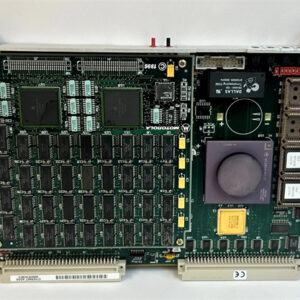
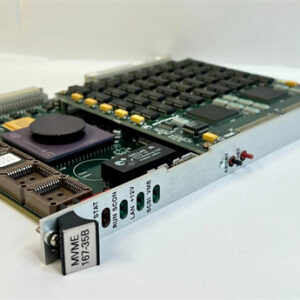
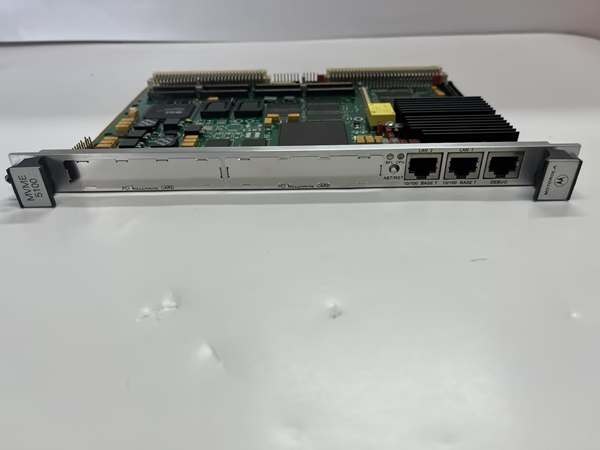
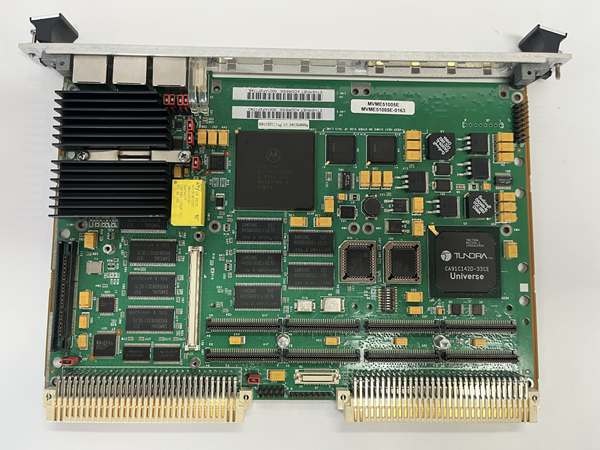
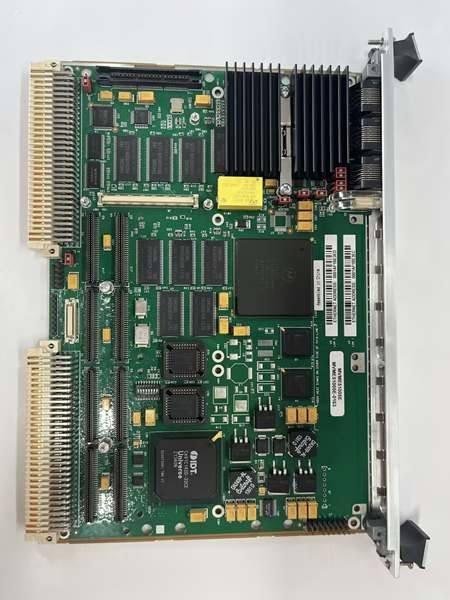
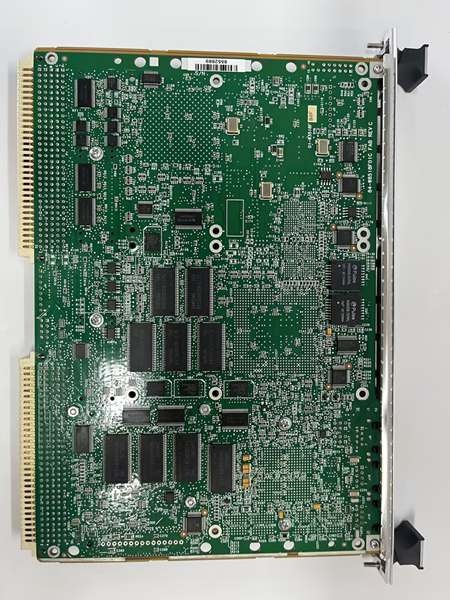
The MOTOROLA MVME51005E-0163 is a 6U VME64x single board computer (SBC) designed for industrial and embedded applications requiring reliable real-time processing. It serves as the computational core in VME-based systems, interfacing with field devices (sensors, actuators) and external networks (SCADA, DCS) via a combination of VME64 backplane communication and high-speed I/O ports.
Core Functional Blocks
The SBC is composed of four primary functional blocks, each optimized for industrial/embedded use:
-
Processing Unit:
-
CPU: Dual-core Freescale MPC8641D PowerPC processor (1.6 GHz per core), featuring a 32 KB L1 instruction cache, 32 KB L1 data cache, and 2 MB L2 cache (shared between cores). The MPC8641D is optimized for real-time computing with a low-latency memory architecture, making it suitable for control algorithms (e.g., PID loops, turbine speed regulation).
-
Memory: 512 MB DDR2 SDRAM (ECC optional) for error-free data storage and retrieval, plus 1 GB NAND flash for firmware and application storage. The ECC memory prevents data corruption in high-reliability applications (e.g., power grid monitoring).
-
-
Bus Interface:
-
VME64x: Compliant with VME64x standards, supporting 32/64-bit addressing and data paths for seamless connectivity with VME-based I/O and system controllers.
-
PMC/XMC: One PMC/XMC site supporting PCI-X/PCIe x4, enabling expansion with specialized modules (e.g., A/D converters, communication cards).
-
-
I/O Subsystem:
-
Ethernet: Two 10/100/1000BASE-T Ethernet ports (RJ45) for high-speed network connectivity, supporting redundant or segmented networks.
-
Serial: Two RS-232/422/485 serial ports for legacy device integration.
-
USB: Two USB 2.0 ports for connecting peripheral devices (e.g., keyboards, mice, storage devices).
-
-
Power & Cooling:
-
Power Supply: Operates on VME standard power supplies (+5V DC, ±12V DC), with typical power consumption of 25 W.
-
Cooling: Air-cooled (standard) or conduction-cooled (optional) for reliable operation in harsh environments (-40°C to +71°C).
-
Operational Workflow
-
Power-Up: The SBC draws power from the VME backplane and initializes the firmware (stored in NAND flash).
-
Boot Process: The firmware configures the MPC8641D processor, memory, and I/O interfaces, then boots the operating system (e.g., VxWorks, Linux).
-
Task Execution: The dual-core processor executes real-time control programs (e.g., signal processing, PID loops) and communicates with field devices via VME64 or Ethernet.
-
Data Transfer: High-speed data transfer between the SBC and VME backplane, while the Ethernet ports handle network communication (e.g., uploading data to SCADA systems).

Motorola MVME51005E-0163
Core Technical Specifications
|
Parameter
|
Specification
|
|---|---|
|
Processor
|
Dual-core Freescale MPC8641D PowerPC @ 1.6 GHz/core
|
|
Cache
|
32 KB L1 I-cache/32 KB L1 D-cache (per core), 2 MB shared L2 cache
|
|
Memory
|
512 MB DDR2 SDRAM (ECC optional), 1 GB NAND flash
|
|
VMEbus Interface
|
VME64x-compliant, 32/64-bit addressing, 32/64-bit data paths
|
|
Expansion
|
1x PMC/XMC site (PCI-X/PCIe x4 capable)
|
|
I/O Ports
|
2x 10/100/1000BASE-T Ethernet, 2x RS-232/422/485 serial, 2x USB 2.0
|
|
Operating Temperature
|
-40°C to +71°C (conduction-cooled option available)
|
|
Power Consumption
|
~25 W typical (air-cooled)
|
|
Form Factor
|
6U VME (233.35 mm × 160 mm × 25 mm)
|
|
Certifications
|
CE, UL, MIL-STD-810F (vibration/shock)
|
Customer Value & Operational Benefits
1. Reliable Real-Time Processing
The dual-core MPC8641D processor and 512 MB DDR2 SDRAM enable the MVME51005E-0163 to handle complex control algorithms (e.g., PID loops for turbine speed regulation) and large datasets (e.g., from 100+ sensors) with low latency. This is critical for applications like power generation (maintaining grid frequency) and industrial automation (controlling robotic arms).
2. Rugged Durability for Harsh Environments
The -40°C to +71°C operating temperature range and shock/vibration resistance (50 g shock, 8 g vibration) make the SBC suitable for:
-
Power Plants: Turbine control systems, where high temperatures and vibration are common.
-
Factories: Automated production lines, where dust and moisture are present.
-
Aerospace: Test benches for aircraft components, where reliability is critical.
3. Flexible Expansion for Custom Applications
The PMC/XMC site allows users to add custom functionality (e.g., A/D conversion modules for sensor data acquisition, communication cards for legacy device integration) without modifying the core SBC. This flexibility is ideal for prototype development and system upgrades.
4. Legacy System Compatibility
The MVME51005E-0163 maintains pin-level and software continuity with older MVME series modules, enabling phased modernization projects without requiring a total system overhaul. Engineers can port proven real-time code or OS images with minimal modification, preserving certification and validation cycles.
Motorola MVME51005E-0163
Field Engineer’s Notes (From the Trenches)
When installing the MVME51005E-0163, always verify the VME backplane voltage (+5V DC, ±12V DC) with a multimeter before powering up—incorrect voltage can damage the SBC. I once saw a technician fry a board because he used a non-regulated power supply.Check the PMC/XMC slot alignment before inserting expansion cards—misalignment can damage the slot pins. Use the guide rails on the chassis to ensure proper alignment.Test the Ethernet ports (ping the device’s IP address) after installation—use a crossover cable if connecting directly to a laptop. I’ve spent hours troubleshooting “no comms” faults only to find a bad Ethernet cable.
Real-World Applications
1. Power Generation: Turbine Speed Regulation
A U.S. power plant uses the MVME51005E-0163 to control a 500 MW gas turbine. The SBC’s MPC8641D processor executes PID loops to adjust fuel flow and turbine speed, maintaining grid frequency (50/60 Hz) within strict limits. The dual Ethernet ports enable remote monitoring via the plant’s SCADA system, while the PMC/XMC site adds a communication module for legacy device integration.
2. Industrial Automation: Robotic Assembly Lines
A automotive manufacturer uses the MVME51005E-0163 as the core of its robotic assembly line control system. The SBC’s dual-core processor executes PID loops to adjust robot arm movements, while the serial ports integrate with legacy sensors (e.g., proximity switches). The -40°C to +71°C operating range ensures reliable operation in the factory floor environment.