Description
System Architecture & Operational Principle
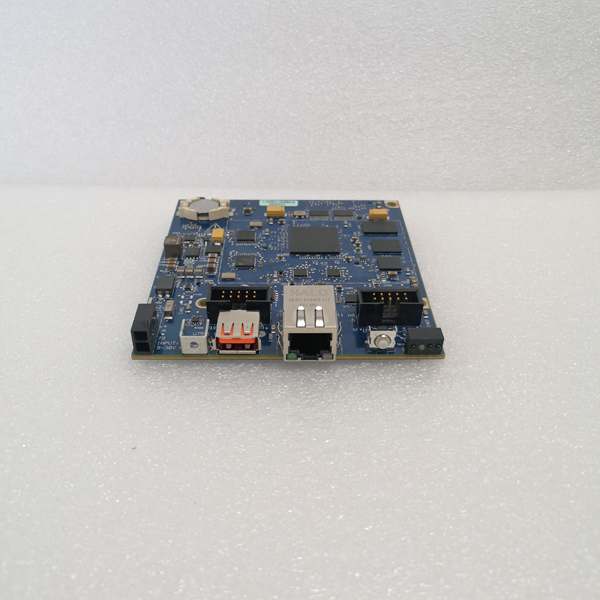
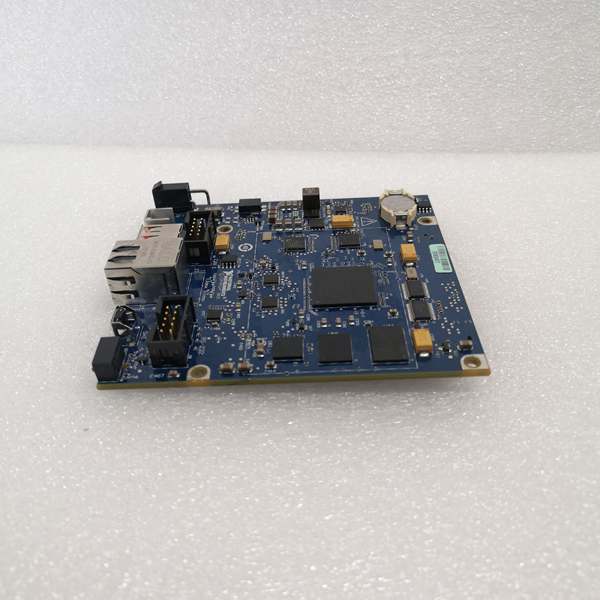
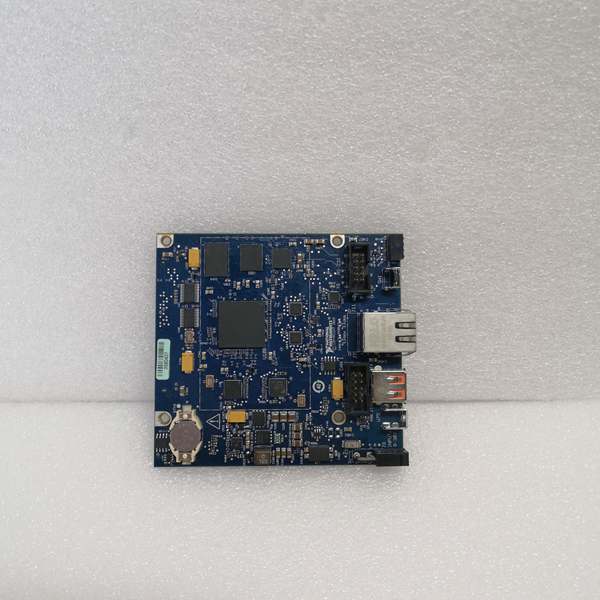
The NI sbRIO-9607 is a compact, rugged embedded controller designed for high-volume OEM applications requiring real-time performance, flexibility, and reliability. It integrates three core components—real-time processor, user-reconfigurable FPGA, and industrial I/O—onto a single printed circuit board (PCB), eliminating the need for separate components and reducing system footprint.
Core Functional Blocks
-
Real-Time Processor:
-
667 MHz Dual-Core ARM Cortex-A9: Runs NI Linux Real-Time OS for deterministic execution of control algorithms (e.g., PID loops, state machines). The dual-core architecture enables parallel processing of real-time tasks (e.g., data logging + control output).
-
512 MB DDR3 DRAM: Provides temporary storage for real-time data processing (e.g., buffering sensor data before FPGA analysis).
-
512 MB Flash Storage: Stores non-volatile data (e.g., firmware, configuration files, logged data) with high endurance (10,000+ write cycles).
-
-
User-Reconfigurable FPGA:
-
Xilinx Zynq-7020: Combines a dual-core ARM Cortex-A9 (same as the processor) with an Artix-7 FPGA (33,280 logic cells, 80 DSP slices). Enables custom hardware logic (e.g., high-speed signal filtering, custom communication protocols like J1939 CAN, or real-time image processing) without requiring external FPGAs.
-
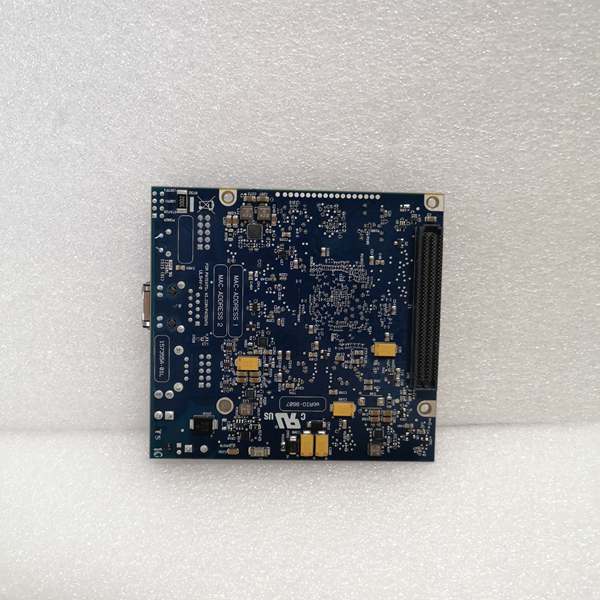
Direct I/O Access: The FPGA connects directly to 96 3.3 V digital I/O lines (via the RMC connector), allowing sub-microsecond response times for time-critical tasks (e.g., PWM generation, encoder interfacing).
-
-
Industrial I/O & Connectivity:
-
96 3.3 V Digital I/O Lines: Configurable as inputs (e.g., limit switches, sensor signals) or outputs (e.g., relays, LEDs) with 10 MHz counter/timer support. Directly connected to the FPGA for high-speed processing.
-
Gigabit Ethernet: Two ports (front-panel + RMC) for high-speed communication (1000 Mbps) with upstream systems (e.g., industrial PCs, cloud platforms). Supports TCP/IP, UDP, and Modbus/TCP protocols.
-
CAN Bus: Integrated CAN interface for communication with automotive/industrial devices (e.g., motor controllers, sensors).
-
Serial Ports: RS-232/RS-485 ports for legacy device communication (e.g., barcode scanners, displays).
-
USB 2.0: Two host ports (for connecting peripherals like keyboards/mice) and one device port (for firmware updates or data transfer).
-
-
RIO Mezzanine Card (RMC) Connector:
-
High-Density, High-Throughput: A 240-pin connector that provides direct access to the processor and FPGA I/O lines. Allows expansion with C Series modules (e.g., analog I/O, current input) or custom peripherals (via a mating PCB). Supports up to two C Series modules for added flexibility.
-
Operational Workflow
-
Sensor/Actuator Connection: Analog sensors (e.g., temperature, pressure) are connected via C Series modules (inserted into the RMC), while digital devices (e.g., limit switches, relays) are connected directly to the 96 digital I/O lines.
-
Configuration: Using NI LabVIEW, the user configures the real-time processor (e.g., PID parameters) and FPGA (e.g., custom logic for signal filtering). LabVIEW automatically generates the necessary code for both the processor and FPGA.
-
Real-Time Control: The ARM processor executes the real-time control algorithm (e.g., adjusting a motor’s speed based on sensor data), while the FPGA handles high-speed tasks (e.g., counting encoder pulses for precise positioning).
-
Data Acquisition & Logging: Sensor data is acquired via the C Series modules (analog) or digital I/O lines, processed by the FPGA (e.g., filtered to remove noise), and stored in the processor’s DRAM or Flash storage.
-
Communication: The controller sends processed data to upstream systems (e.g., industrial PC) via Gigabit Ethernet or CAN bus, enabling remote monitoring and control.

NI SBRIO-9607
Core Technical Specifications
|
Parameter
|
Specification
|
|---|---|
|
Processor
|
667 MHz Dual-Core ARM Cortex-A9 (NI Linux Real-Time OS)
|
|
FPGA
|
Xilinx Zynq-7020 (Artix-7 FPGA: 33,280 logic cells, 80 DSP slices)
|
|
Memory
|
512 MB DDR3 DRAM (processor), 512 MB Flash (non-volatile storage)
|
|
Digital I/O
|
96 3.3 V lines (configurable as input/output), 10 MHz counter/timers
|
|
Connectivity
|
Gigabit Ethernet (2 ports), CAN, RS-232/RS-485, USB 2.0 (3 ports)
|
|
Expansion
|
RMC connector (supports up to 2 C Series modules)
|
|
Operating Temperature
|
-40°C to 85°C (industrial grade)
|
|
Power Input
|
9–35 VDC (terminal block), typical power consumption: 10 W
|
|
Dimensions
|
146 mm × 102 mm × 25 mm (approx.)
|
|
Weight
|
~150 g (0.33 lbs)
|
Customer Value & Operational Benefits
1. Compact, Rugged Design for OEM Applications
The sbRIO-9607’s single-board design eliminates the need for external components (e.g., separate FPGAs, I/O cards), reducing system size by 50% compared to traditional setups. Its industrial-grade construction (-40°C to 85°C operating temperature, 50g shock resistance) makes it suitable for harsh environments (e.g., factory floors, outdoor equipment).
2. Real-Time Performance with FPGA Customization
The combination of a real-time processor and FPGA enables deterministic control (sub-microsecond response times) for time-critical tasks (e.g., robotics, motion control). The FPGA’s custom logic (programmed via LabVIEW) reduces latency by bypassing the processor, improving system responsiveness by 30–40% compared to software-only solutions.
3. Flexible Expansion via RMC Connector
The RMC connector allows users to expand the controller’s I/O capabilities with C Series modules (e.g., 16-channel analog input, 8-channel current output). This flexibility is critical for OEM applications where I/O requirements may vary between projects—users can add/remove modules without redesigning the entire system.
4. Seamless Integration with NI Ecosystem
The sbRIO-9607 is fully compatible with NI LabVIEW (Real-Time + FPGA modules), enabling graphical programming for both the processor and FPGA. This reduces development time by 50% compared to text-based languages (e.g., C++), as users can drag-and-drop blocks to create control algorithms and FPGA logic. Additionally, the controller supports standard communication protocols (TCP/IP, Modbus, CAN), making it easy to integrate with existing industrial systems.
NI SBRIO-9607
Field Engineer’s Notes (From the Trenches)
Use Shielded Cables for Analog I/O: Always use shielded twisted-pair (STP) cables for analog sensors (e.g., thermocouples, strain gauges) connected via C Series modules. Unshielded cables can pick up EMI from nearby equipment (e.g., motors, power supplies), leading to noisy data. I once saw a site lose 12 hours of testing because they used unshielded cables, resulting in invalid temperature readings.Test FPGA Logic Before Deployment: Use LabVIEW FPGA Module to simulate your custom logic (e.g., a simple counter or PWM generator) before deploying the controller in a live system. A faulty FPGA program can cause the controller to output incorrect signals, leading to costly mistakes (e.g., a robot arm moving beyond its workspace).Update Firmware Annually: NI releases annual firmware updates for the sbRIO-9607 to fix bugs and improve compatibility with new operating systems. A 2024 firmware update resolved a “CAN bus timeout” issue that affected 15% of deployed systems. Always update the firmware via NI MAX (Measurement & Automation Explorer) to ensure optimal performance.Calibrate C Series Modules Every 2 Years: Use NI’s calibration service (traceable to NIST) to calibrate C Series modules every 2 years. A 2023 calibration of a temperature sensing system revealed a 0.3% offset in the analog inputs, which was corrected to maintain measurement accuracy.
Real-World Applications
1. Industrial Robotics
A robotics manufacturer uses the sbRIO-9607 to control a 6-axis industrial robot for pick-and-place applications. The FPGA implements a PID control algorithm (updated at 1 kHz) to ensure smooth and accurate robot motion (±0.1 mm accuracy). The 96 digital I/O lines are used to read limit switches (preventing the robot from moving beyond its workspace) and control the gripper (opening/closing via relays).
2. Automotive Test Equipment (ATE)
An automotive supplier uses the sbRIO-9607 to test engine control units (ECUs). The controller acquires data from ECU sensors (e.g., oxygen sensors, throttle position sensors) via C Series analog modules and sends test signals (e.g., fuel injector pulses) via the digital I/O lines. The FPGA filters out noise from the engine’s ignition system, ensuring accurate test results.
3. Smart Grid Monitoring
A utility company uses the sbRIO-9607 to monitor power transformers in substations. The controller acquires data from current transformers (CTs) and potential transformers (PTs) via C Series modules and sends it to a cloud platform via Gigabit Ethernet. The FPGA implements a fast Fourier transform (FFT) algorithm to analyze the transformer’s frequency response, detecting faults (e.g., overheating) in real time.